Physical AI & Robotics 2026: Data on Adoption & ROI
Deep dive into the state of Physical AI in May 2026. Explore data-driven insights on industry adoption, cost-benefit analysis, and new robotic capabilities.
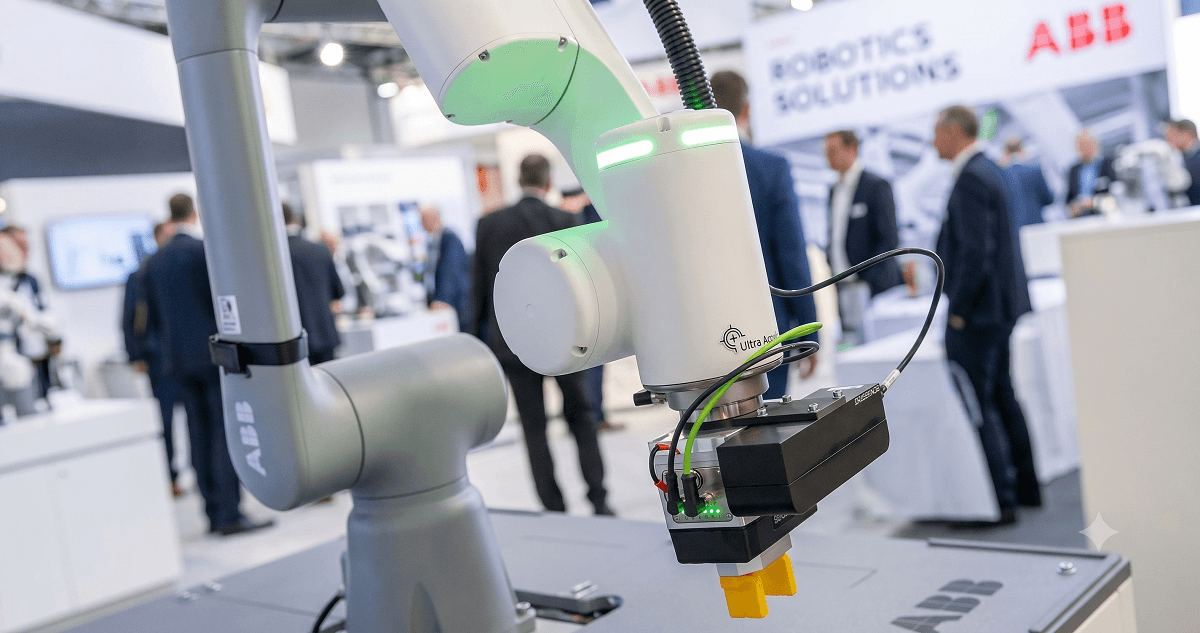
It's May 2026, and the world of industrial and commercial operations looks fundamentally different than it did just a few years ago. The persistent buzz around 'Physical AI'—the embodiment of advanced artificial intelligence in physical robots that can perceive, reason, and interact with the unstructured world—has solidified into a market-defining reality. This isn't about caged, single-task robots anymore. This is about autonomous agents working alongside humans in warehouses, hospitals, and retail floors.
The Economic Tipping Point: ROI on Intelligent Automation
For decades, the high cost of robotics was a barrier to all but the largest manufacturers. The revolution of Physical AI was sparked by a simple economic inversion: the cost of intelligent robots began to fall faster than the productivity gains they delivered began to rise. This created a 'cost-benefit scissor' effect, which reached its critical crossover point in late 2025. As of today, investing in a fleet of autonomous mobile robots (AMRs) is not just a long-term strategic play; it's an immediate financial positive.
The Cost-Benefit Scissor of Physical AI (2024-2026)
The chart clearly illustrates this trend. While the average acquisition cost for a sophisticated autonomous robot has plummeted from $150,000 to just $75,000, the productivity gains from their deployment have soared from a mere 5% to over 45%. This gap represents a massive value creation opportunity that savvy businesses are now capturing.
Beyond Simple Cost-Cutting
The true ROI of Physical AI isn't just in replacing labor. It's in the new capabilities it unlocks: 24/7 operations, radical flexibility in production, and data-driven insights from the physical world that were previously impossible to gather.
Adoption Landscape: Where Physical AI is Reshaping Industries
Adoption is not uniform. Pioneers in manufacturing and logistics have paved the way, driven by intense pressure on supply chains and labor. Other sectors like healthcare and retail are now rapidly catching up, moving from pilot projects to full-scale deployments. The following chart maps the current landscape, plotting industry investment against the achieved level of automation. In this visualization, the size of the deployed fleet would be represented by the bubble size, with Manufacturing and Logistics being the largest.
Physical AI Adoption by Industry (May 2026)
Manufacturing remains the dominant force, with deep investment leading to high levels of automation. Logistics & Warehousing is a close second, leveraging Physical AI to handle the immense pressures of e-commerce. Healthcare shows remarkable potential; though investment is moderate, the impact on patient care and lab efficiency is profound. Retail is an emerging player, using robots for inventory management and in-store logistics.
""Physical AI is no longer about replacing tasks, but about augmenting entire workflows and creating new value chains."
From Dumb Arms to Smart Partners: The Capability Revolution
The most significant shift isn't economic, but functional. Classic robotics of the early 2020s was defined by precision and repetition in controlled environments. Physical AI is defined by adaptation and intelligence in chaotic, human-centric spaces. The leap in core capabilities is staggering, turning machines from dumb tools into collaborative partners.
Capability Evolution: Robotics 2020 vs. Physical AI 2026 (Score 1-10)
As the data shows, the improvements are dramatic. 'Unstructured Object Manipulation'—the ability to pick up a novel object—has gone from a lab curiosity to a reliable warehouse skill. 'Human-Robot Collaboration' is no longer about safety sensors but about predictive, helpful behavior. Robots can now autonomously correct errors and perform visual inspections with superhuman accuracy, thanks to advanced computer vision.
- Key Enablers: This leap was fueled by a confluence of technologies.
- Advanced Sensors: 3D cameras, LiDAR, and tactile sensors provide rich data about the world.
- Edge Computing: Powerful AI chips allow for real-time decision-making directly on the robot.
- Simulation: AI models are now trained for millions of hours in photorealistic virtual worlds before being deployed on a physical robot.
The Road to 2030: What's on the Horizon?
While 2026 marks the arrival of Physical AI in the mainstream, the journey is far from over. The next frontier is the general-purpose humanoid robot, capable of performing a wide range of tasks in human environments. We also anticipate the rise of sophisticated swarm intelligence for coordinating large fleets and an intensified debate around the societal impacts, from job market transformations to ethical guidelines for autonomous systems. The challenge for leaders is no longer 'if' to adopt, but 'how' to integrate this technology responsibly and strategically to build the enterprises of the future.
Is Your Business Ready for the Physical AI Revolution?
The data is clear: the future of physical work is intelligent and automated. Don't let your operations fall behind.
Assess Your Automation Strategy